Wednesday, July 11, 2012

Heading North from San Jose del Cabo


As previously mentioned, we finally departed the East Cape of Baja after nearly 6 months of playing in the waters of the Sea of Cortez.  The "East Cape" refers to the bulge of land northeast of Cabo at the southern tip of Baja.  As we started our drive north we camped at a few beaches on the Pacific side (San Pedrito, La Pastora and El Canejo) where the air and water temperature were at least 10 - 20F lower than the Sea of Cortez side.  This was a good thing as the daytime temperatures were definitely creeping towards 100F down in the Cabo area.

After driving inland north of La Paz, the highway heads back to the Sea of Cortez where we spent some really hot nights at Juncalito Beach and San Lucas Cove south of Santa Rosalia.

Our first stop on the hot Sea of Cortez side, was Juncalito beach. The views here are fantastic.  The backdrop to the beach are gigantic mountains (aptly named "La Giganta") while the view across the water is similarly pleasant.  We stayed here on Father's Day which turns out to be a huge day of partying on the beach for mom, dad, and the kids.  We later learned from our new amigos at San Lucas Cove (see below) that Father's Day often times causes "cabeza grande".  I think my dad used to call it "football head" - that certain headache you get after a long day of football Saturday drinking.

La Giganta mountains behind Heather and Scott fishing at Juncalito beach

Clam ceviche served in it's own shell
Our stop at San Lucas Cove was a last minute decision that turned out to be interesting but definitely not worth it.  Our camping spot was on a defunct, sketchy campground where we thought we could at least camp for free (no toilets, no water, etc.).  We didn't fall asleep until at least 4 am because it was so hot.   That morning at 7:30 am, some random lady from the RV park next door came over to collect 100 pesos (!!) for camping.  She WOKE us up with annoying, endless yells of "hola, buenos dias, hola, buenos dias, hola (and on and on)". Neither of us were awake enough to object, so we handed over the money and tried to get at least an hour more of sleep.  In the big scheme of things, $8 for camping isn't a big deal but we have been in some amazing locations for the past 7 months and haven't had to pay a dime.  I guess we are getting spoiled.  So, for the interesting part of San Lucas Cove...  As soon as we arrived, a local Mexican invited us next door to his friends' house to eat fresh clam ceviche.  He shucked the clams, squirted some lime juice on them, which caused them to squirm a bit, and then we ate them with saltines and hot sauce.  Really, really tasty.  You will notice in the picture, Scott was enjoying it so much, he couldn't keep his mouth empty long enough for a picture.  It's during these moments where I'm reminded of our horrible Spanish.  I really need to pick up the pace on learning some better Spanish.


Scott with his new amigos (with a face full of clams)
We are now on the Pacific side and won't head back to the Sea of Cortez until the end of October as it's very hot and getting hotter.


Saturday, June 16, 2012

Operation Save-the-Seahorse


"How am I going to swim out with a
seahorse in my hand?"
A few days ago, we turned the truck north after nearly 6 months on the Sea of Cortez near the tip of Baja. 6 months! (As a side note, we will be heading south to mainland Mexico in November at the start of the dry, non-buggy season).  We spent the night on the Pacific side at a beach called La Pastora, about 50 miles up the coast from the tip of Baja.

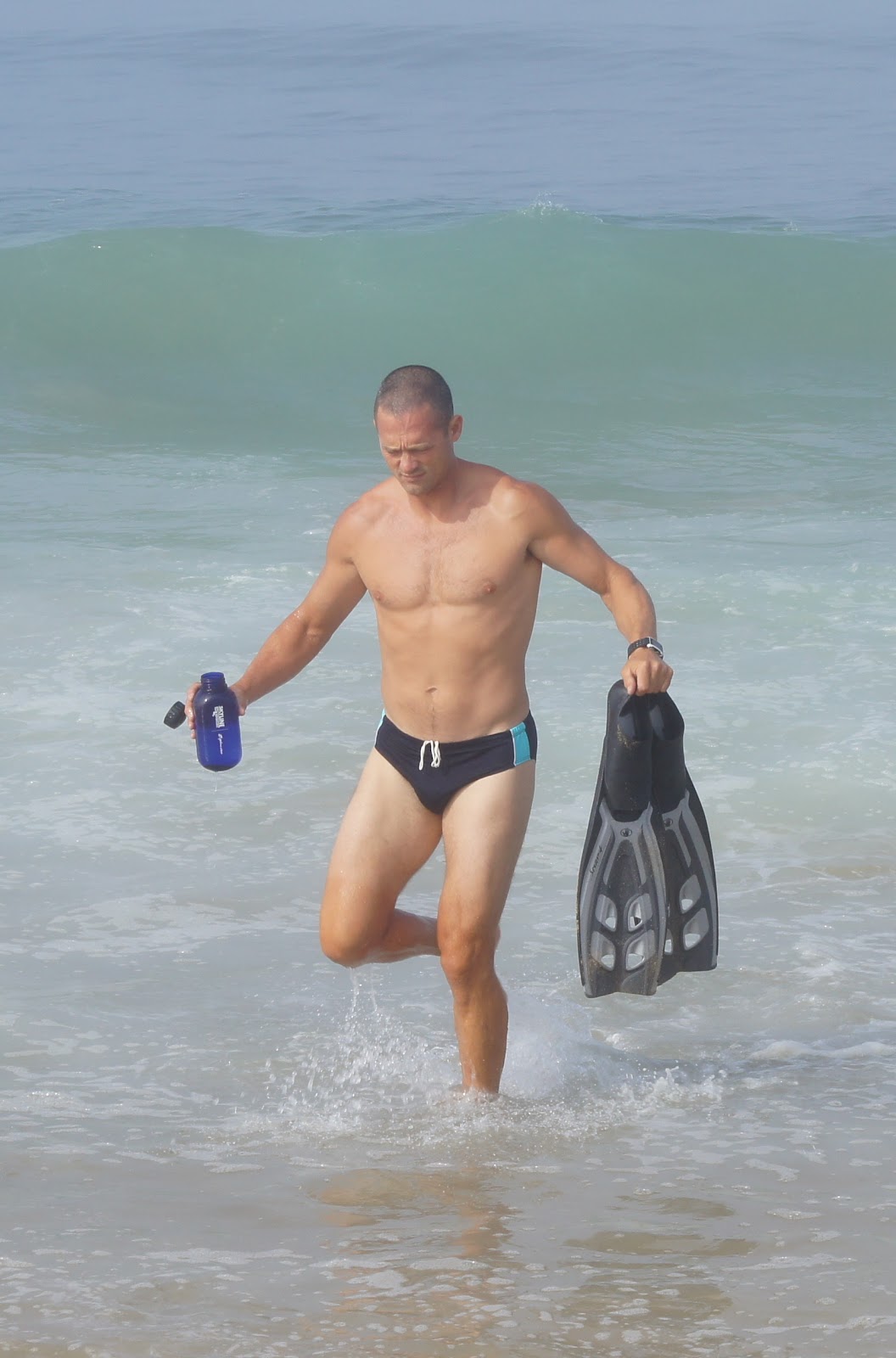
While Scott was taking a dip, I noticed a piece of seaweed washing up on the beach that was moving!  It turns out that it was a female Pacific Seahorse who must have been a long way from home.  I grabbed her from the pounding waves and put her in a bucket, wondering what we were going to do with her. During a lull in the waves, Scott threw her back in the water only to have the eventual pounding waves push her back to shore.  I volunteered Scott to take her out past the waves with his flippers.  We put her in a water bottle and Scott took her out near the edge of the breaking waves.  He lost a flipper in the waves, and in the frenzy, decided to ditch the seahorse hoping that he had gotten far enough out.


The best part was when she would squeeze tighter
around my finger if I moved
A couple hours later, while Scott was fishing from shore, he found her again washed up on the beach, barely moving, covered in sand.  We revived her in a bucket of water and let her rest all night (hoping that she wouldn't die in the bucket).  When I put my finger in the bucket, she would wrap her tail around it, squeezing a little tighter if I moved. Scott submerged a stick with a rock hoping she could do the same to a stick.  It took a while, but she wrapped around the stick and stayed there all night.  I was so worried that she would die overnight.  I told Scott I could never run an animal shelter because I would never sleep, always worried about the sick/injured animals.

Maybe this is when he lost his flipper?
A successful seahorse release
That evening, and the next morning, we went back and forth about what to do with her.  We had seen a "pet store" in Todos Santos, 5 miles south, and wondered if we should drive her back to the pet store with the hope that they had a salt-water aquarium or knew someone that did.  I was skeptical about this approach so I again volunteered Scott to take her out past the breaking waves ("this time farther please").

This time, Scott took her way out past the breakers. When he let her go, she curled up into a ball and stayed at the surface, propelling herself a little, but no match for the wind. Thinking she needed to be deeper, he dove down to the bottom (about 10 feet), and let her go.  He even waited in the cold water for a while to see if she would resurface.  She stayed submerged, so Scott swam in.

I always thought seahorses were something that I would only see in an aquarium.  Despite all of our snorkeling, we've never seen a seahorse in the wild.  I can only hope our efforts made a difference for this one. Scott says if he had written this blog, he would have titled it "Hold Your Horses".

Scott celebrating his seahorse rescue at La Pastora beach 

Saturday, June 9, 2012

Portuguese Man o' War Double Whammy in Baja


We figured it would've happened before now.  The Portuguese Man o' War or "Bluebottle (Bluey)" as the Australians call them are very prevalent in Australia and New Zealand.  We lived and surfed in that area for 3 years and never got hit by one. They pile up on beaches during a strong swell or onshore wind and are known to be toxic and painful if you come in contact with one of their sticky, barbed tentacles.

The Portuguese Man o' War live at the surface of the ocean. The gas-filled bladder (really fun to pop when they have washed up on the beach), floats at the surface, while the tentacles extend deep underwater. Since the man o' war has no means of propulsion, it is moved by a combination of winds, currents, and tides.

Had to go back into our 2008 picture archives to
find this bluey washed up on a Sydney beach
We are still on the southern Sea of Cortez in Baja.  A few days ago a bluebottle wrapped around my hand as I paddled onto a wave.  The pain was excruciating, and as I fell off my board, I vigorously rubbed my hand to get the tentacles off.  Blue tentacles remained even after I rubbed and rubbed. I finally got them off by rubbing (even harder) on my wetsuit.  This was mistake number one.  Our subsequent research found this to be the single worst thing you can do -- DO NOT RUB A BLUEBOTTLE STING.  This releases more toxins and pushes them into your skin.  My hand was shaking and after a bit, I started to feel a tightness in my chest.  I paddled in, and doused the sting in vinegar.  Mistake number two.  Jellyfish stings are typically treated with vinegar but blueys are not jellyfish (despite what everyone thinks).  According to the Wikipedia entry for Man o' Wars, "Vinegar is not recommended for treating stings. Vinegar dousing increases toxin delivery and worsens symptoms of stings. Vinegar has also been confirmed to provoke hemorrhaging when used on the less severe stings of smaller species."  Despite this bit of information, everyone we talk to says, "use vinegar".  I am writing to tell anyone who has happened upon our blog -- DO NOT USE VINEGAR with a bluebottle sting.  I didn't recover from the pain until that night.  It was, without a doubt, the worst pain I have ever experienced.

Two days later, Scott went out snorkeling and got hit on the ankle.  Luckily, we had just been into town and done a ton of research on bluebottles.  He did everything right (well almost).  He pulled off the tentacles with tweezers, took a Benedryl, and then put hot packs on the area.  This is the important part -- "the application of hot water (45 °C/113 °F) to the affected area eases the pain of a sting by denaturing the toxins." (Wikipedia)  In true Scott fashion, he might have been a little too tough because he burned the sh** of out his ankle from too much heat.  I think the blisters from the burn were probably preferred over any evidence of a bluey sting.  Both of us agreed that ice was not helpful and in fact was very painful.  This is another piece of advice often given by the uninformed.

While Scott was paddleboarding he lifted a bluebottle out of the water with his paddle.  He lifted the 7 foot paddle as high as he could but still couldn't find the ends of the tentacles.  We learned that the tentacles are typically 10 metres (30 ft) in length but can be up to 50 metres (165 ft).  I think I'd rather swim with great white sharks.

Monday, May 21, 2012

Laid Up On The East Cape


The fog around our truck as I write this

There's nothing like a foggy, windy day to inspire an uninspiring blog post.  Our last post was over a month ago, so I thought I would check in.  For the most part, the past month has been spent either watching people surf (me doing the watching) or surfing (Scott).  Last month, the day before we posted our most recent blog update, I smashed my foot while kiteboarding.  I tried to jump over a breaking wave and upon landing, one foot came out of the footstrap, leaving the other in a twisted contorted mess as I hit the water.


This jump was more successful

A week later, getting sick of sitting around watching people enjoy the water and waves, I decided to try paddleboarding in the seemingly small waves.  During an unfortunately big set, the 10 foot 30 pound paddleboard struck the inside of my knee.  I am still recovering from both injuries.  Just last week I was able to start kiteboarding and surfing.

Scott surfing, Heather reading, recovering, and hanging out with "Whitemeat"

We've spent 90% of the past couple months at a surf beach called "La Fortuna".  Due to the fact that it isn't the best wave in the area, it doesn't get very crowded, which is why we chose it.  As we were camped there, we met lots of local surfers as well as people who flew in for short surf vacations.  We met Justin and Mary, a young couple from Ventura -- Mary is a pro surfer and Justin is a photographer for Patagonia among others.  Pretty nice way to travel and make a living, huh?  We also met Fred, a hydrologist from Sacramento, who has been going on Latin American surf trips since before I was born.  I wish I had gotten a pic of Ben, Bo, and Scott, the "LA guys" who have been traveling to La Fortuna for the past 20 years, and are good friends with a guy we surfed with in New Zealand--small world! Ben surprised us with a bag of Trader Joe's Peanut Butter Pretzels after I went on and on about how much we miss TJ's and the PB pretzels.  We never got a chance to say goodbye to them -- such a bummer.

Scott chatting with Justin and Mary, Fred saying goodbye after his whirlwind 1-week vacay on the East Cape 
I know how you feel buddy


"Whitemeat" is the name we have given to the local, sweet-natured pitbull who visits us when his owner is out boogie boarding.  I asked his owner, Juan, what his name was but couldn't understand and/or pronounce it, so "Whitemeat" it is.  He howls and moans when Juan is in the water and occasionally makes the swim out through the waves to be near him.  So precious.